Podcast Guest Guide
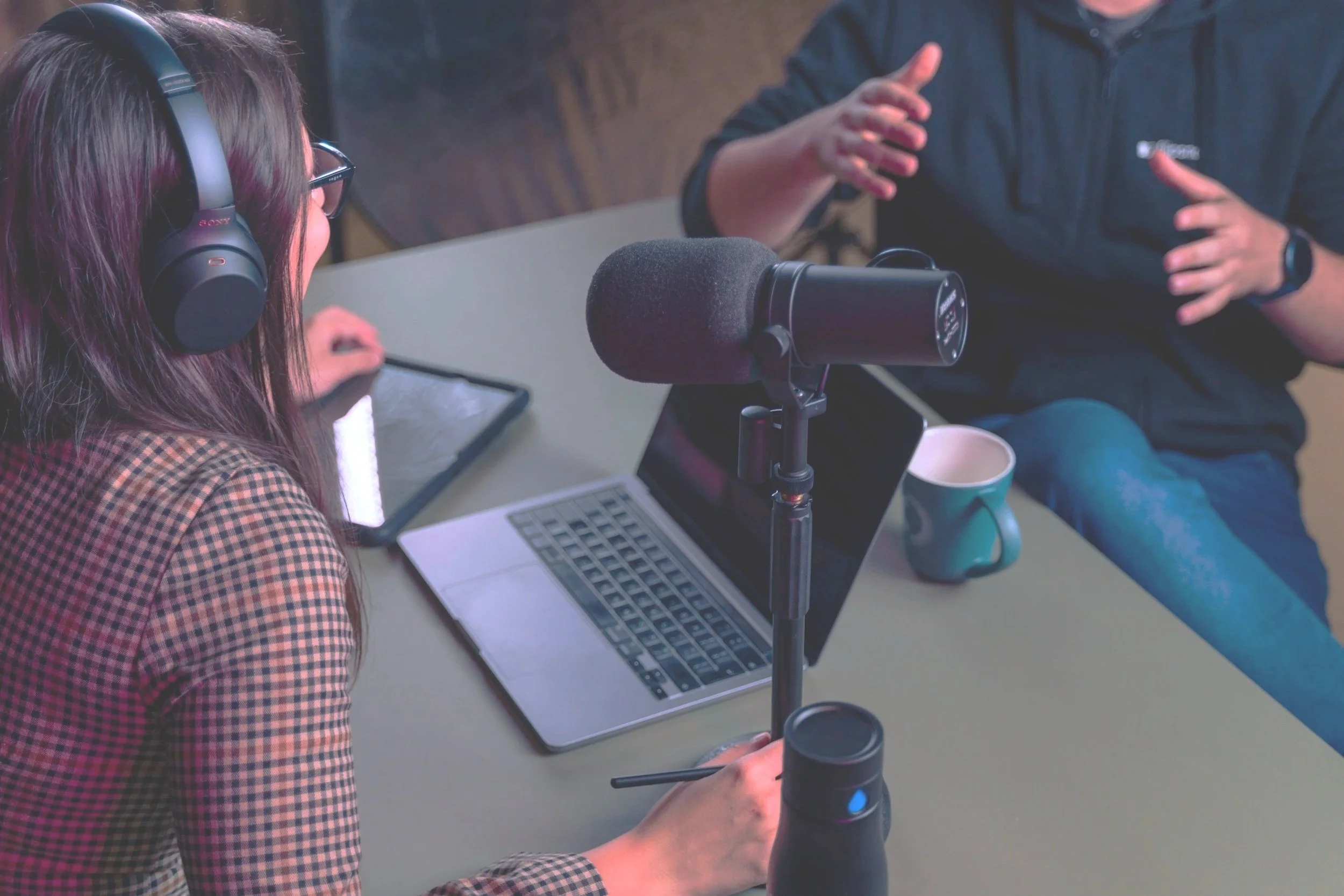
Thank you for considering being a guest on Coworkers with AI.
The purpose of this podcast is to explore the complexities of how increasing collaboration with artificial intelligence is changing how we as individuals work and the dynamics of our teams and organizations.
For many, work now includes use of generative AI on a daily basis and increasingly agents that work on behalf of people or that need to be managed as a team member. This podcast isn’t about demonstrating the latest AI tools or advising on organizational transformation. It's about navigating the way AI use is changing us and our teams, retaining what is important to us as humans and creating the future that we want to see.
Podcast target audience: High performing knowledge workers who are actively using AI and trying to understand what it means for their work, their value, and their future. Listeners generally work at larger organizations or for early adopting organizations where use of AI is not optional. These are people who are motivated, capable, and leaning in—but are also navigating ambiguity, pressure, and changing expectations.
What to Expect
Hosted by Gretchen LaBelle, each episode may also have a cohost in addition to a guest. Episodes are 45-50 minutes and follow a conversational arc rather than a fixed interview format. While every discussion is unique, we generally move through five stages.
Note: At least 3 days prior to recording, guests are provided with a Show Flow to help prepare. About 30 minutes of preparation is recommended.
1. The Topic
We begin with a timely question or issue emerging in the workplace as AI becomes part of everyday work. Topics may include conversations such as:
Friction levels of AI versus coworker
AI etiquette and workplace norms
Human skills that compound with AI
Speed of work at the pace of AI
AI "slop" and quality at work
Skill development versus skill atrophy
AI agents and the future of teamwork
Transforming your own job and your team
The changing role of managers and leaders
2. Exploring the Tensions
Every topic contains competing forces. Rather than debating who's right, we'll explore those tensions together. Examples include:
Productivity vs. human growth
Speed vs. thoughtful work
Automation vs. craftsmanship
Confidence vs. verification
Personal capability vs. AI dependence
Individual innovation vs. organizational governance
Efficiency vs. learning
Personalization vs. shared ways of working
Human judgment vs. AI recommendations
Scaling work vs. preserving relationships
Technical possibility vs. responsible adoption
These are often the most interesting parts of the conversation because there are rarely simple answers.
3. Looking Forward
Rather than trying to predict the future, we'll explore practical ways to navigate it. Questions might include:
What mindsets will serve people well?
What practices should teams experiment with?
What new responsibilities are emerging?
How can organizations help people thrive alongside AI?
What should we intentionally preserve as work continues to evolve?
The goal is to leave listeners with better questions and useful ways of thinking.
4. Resources Worth Exploring
Many episodes naturally surface books, articles, research, frameworks, experiments, or practical tools that have influenced our thinking.
When relevant, we'll also point listeners toward Coworkers with AI resources, including frameworks and guides that help people put these ideas into practice.
5. A Reflective Question
Every episode closes with a single question designed to stay with listeners after the conversation ends.
Rather than providing a final answer, we hope each episode leaves people thinking differently about how they want to work with AI—and who they want to become because of it.

Addressing broader context
Increased co-working with AI is not happening a vacuum, and many important topics naturally arise in conversation. We may acknowledge these as part of the broader context, but they are generally not the focus of the show.
Examples include:
Debates about whether AI is "good" or "bad"
Predictions about widespread job loss or replacement
Company-specific AI announcements or competitive strategies
Evaluating or comparing individual AI tools and platforms
Enterprise AI implementation or adoption strategies
Technology news and product releases
Regulatory or policy debates
Environmental and sustainability impacts of AI
Instead, Coworkers with AI focuses how humans can shape themselves and our work lives given the increased use of AI.
We're interested in questions such as:
How is work changing?
What new tensions are emerging?
How are people adapting?
What habits, skills, and mindsets matter most?
How can individuals and teams thrive as AI becomes a coworker?
These broader topics provide valuable context, but our goal is to explore how they shape the day-to-day experience of people at work, rather than to debate the topics themselves.